

By: All Education Schools Staff
Updated: February 6, 2026
Early childhood education teacher salaries in California

Choosing California as a destination for a career in early childhood education offers both professional and personal rewards. It’s a state where ECE professionals are valued, supported and given opportunities to make a meaningful impact. Here are just a few good reasons to become an early childhood education (ECE) in California:
- Strong demand for ECE professionals:
- California has the largest population in the United States, including a significant number of children under the age of five. This creates a steady demand for qualified ECE teachers. The state is investing in expanding universal preschool and transitional kindergarten programs, which increases the need for skilled ECE teachers.
- Progressive policies:
- California is rolling out universal transitional kindergarten, making it available to all 4-year-olds by 2025. This initiative creates numerous job opportunities and emphasizes the importance of early education. the state also places a strong emphasis on quality in early childhood education, aligning with research showing the importance of early years in child development.
- Competitive compensation:
- While the cost of living in California can be high, ECE teachers in the state often earn more than their counterparts in other states, especially in urban areas. Many ECE professionals in California benefit from unions and advocacy groups that push for fair wages and better working conditions.
- Supportive funding and programs:
- California allocates significant funding toward early education programs, providing resources for teacher training, classroom materials and development initiatives. Many ECE programs in California are subsidized for low-income families, ensuring access to quality education and creating a stable demand for teachers.
Quick view of ECE teachers in California
There are approximately 48,570 people employed as preschool teachers in California says the U.S. Bureau of Labor Statistics (BLS)—and this does not account for those who are special education preschool teachers (there are 1,880 in California, said the BLS). The number amounts to around three people per 1,000 who live in the state, actually working as preschool teachers. The BLS said that California is the highest employer of preschool teachers in the U.S. The median wage per hour in California is $23 and the forecasted job growth for the coming decade is 4.5%.
California offers a diverse range of employment opportunities for Early Childhood Education (ECE) teachers across public, private and non-profit sectors. Here are five notable employers in the state:
- YMCA of San Francisco and multiple statewide locations:
- A leading non-profit organization providing community programs, including early childhood education, across multiple locations in California.
- ChildCare Careers, Hayward, San Jose, Los Angeles and other locations:
- A staffing agency specializing in providing qualified early childhood education teachers to preschools and child care centers across California.
- Merryhill School, Folsam and other campuses:
- A private school network offering early childhood education programs with multiple campuses in California.
- California Department of Education, Sacramento headquarters:
- Provides funding, resources and oversight for public early childhood education programs, including universal pre-K and transitional kindergarten.
- Head Start, Statewide, including urban centers like Los Angeles, San Diego and Oakland:
- Federally funded programs that promote school readiness for children under five from low-income families, with numerous centers across California.
ECE teacher salary stats for California
Your salary as an early childhood education teacher in California depends upon several factors, including where you work in the state, how much experience you have, what level of education you have attained, your area of specialty and whether you have earned any professional certifications.
Median ECE teacher salary in California
In California, preschool teachers earn an average of $23 per hour said the BLS, which translates to approximately $47,400 annually, based on a 40-hour workweek. This is a significant increase over the national median of $38,140 and makes California the third highest paying state in the U.S., according to the BLS.
It’s important to note that salaries can vary significantly based on factors such as location within the state, level of education, years of experience, and the specific employer. For instance, California offers competitive salaries for ECE teachers, often higher than the national average, particularly in urban areas. However, the cost of living in the state is among the highest in the U.S., with housing, transportation and childcare being key expenses. Salaries and affordability vary widely by region, with rural areas being more affordable than cities like San Francisco or Los Angeles.
Median salaries for the state and its main metro areas are below:
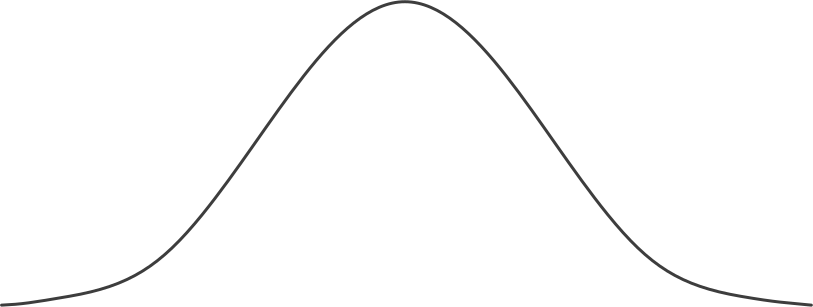

10%$37,870
25%$43,910
50%$47,400Median
75%$59,150
90%$65,350
Median Hourly Wage$23
Job growth4.5%
Total Employment55,700
| Metro area | Median Salary | Bottom 10% | Top 10% |
|---|---|---|---|
| Visalia, CA | $56,930 | $37,080 | $75,100 |
| San Francisco-Oakland-Fremont, CA | $53,810 | $45,960 | $71,800 |
| San Jose-Sunnyvale-Santa Clara, CA | $51,190 | $45,460 | $72,900 |
| Modesto, CA | $49,500 | $37,830 | $77,400 |
| Santa Maria-Santa Barbara, CA | $48,130 | $38,430 | $64,040 |
| Merced, CA | $48,120 | $37,000 | $71,020 |
| Santa Cruz-Watsonville, CA | $47,780 | $38,610 | $73,370 |
| Salinas, CA | $47,280 | $38,910 | $71,550 |
| Vallejo, CA | $46,960 | $38,660 | $64,980 |
| Santa Rosa-Petaluma, CA | $46,710 | $39,580 | $64,240 |
Source: U.S. Bureau of Labor Statistics (BLS) 2025 median salary; projected job growth through 2035. Actual salaries vary depending on location, level of education, years of experience, work environment, and other factors. Salaries may differ even more for those who are self-employed or work part time.
Types of work environments for early childhood education teachers in California
Different environments cater to the diverse needs of children in California, providing varied opportunities for ECE professionals. Here’s a list of common work environments for ECE teachers and the median annual salary for the state:
| Workplace | Median annual salary from the BLS |
|---|---|
| Preschools | $47,400 |
| Kindergartens | $82,550 |
| Specialty schools, such as Montessori or bilingual immersion | $44,530 |
| Elementary schools | $99,650 |
| Special education schools | $59,550 |
Salary ranges for preschool teachers in California
The salary range for ECE teachers in California typically spans from $37,870 to $65,350 per year. This accounts for entry-level positions to more experienced teacher or administrative roles and takes into consideration other factors such as education, certifications and specializing.
Pay by metro area for California ECE teachers
Your earning level may depend upon where you live within a state and cities tend to pay better than rural or less populated areas. As noted earlier, California ranks first as a state for early education teacher employment, with the Los Angeles-Anaheim-Long Beach metro area taking the number two spot in the country for highest employment. That said, here’s what the BLS reports as the top 10 highest paying metro areas for ECE teachers in the U.S.
Job growth and outlook for California preschool teachers
The employment outlook for preschool teachers in California is promising, with significant growth anticipated in the coming years. According to O*NET, a subsidiary of the BLS, employment for preschool teachers in the state is projected to increase by 22% through 2030, rising from 56,900 to 69,500 positions. This growth is expected to result in approximately 8,100 job openings annually, which include new positions and replacements for departing workers.
Nationally, the BLS projected a 4.5% growth in employment for preschool teachers through 2035, aligning with the average growth rate for all occupations. The BLS also noted that about 61,400 job openings for preschool teachers are expected each year during this period, primarily due to the need to replace workers who transfer to different occupations or exit the labor force.
The increasing recognition of the importance of early childhood education and the rising enrollment of children in preschool programs contribute to the growing demand for qualified preschool teachers. This trend underscores the need for well-trained educators to support the developmental and educational needs of young children.
The BLS reported the top metro areas for the employment of ECE teachers in the U.S. as:
Factors affecting ECE teacher salaries in California
California-specific factors significantly impact the pay of early childhood education teachers. These include the cost of living, state education policies, funding levels, workforce demand and regional disparities. Here’s a breakdown:
- Cost of living:
- California has one of the highest costs of living in the U.S., particularly in metropolitan areas like San Francisco, Los Angeles and San Diego. This creates pressure for higher wages but also makes low-paying ECE positions challenging for workers.
- State policies and funding:
- California has invested in universal pre-K programs and transitional kindergarten (TK) expansions, increasing demand for ECE teachers and raising potential wages in some regions. Funding levels for publicly supported preschool programs directly affect pay scales. More funding often leads to better wages and benefits.
- Unions and advocacy:
- Advocacy efforts by organizations like the California Child Care Resource and Referral Network and unions have pushed for better wages and working conditions. Unionized workplaces tend to have higher wages than non-unionized ones.
- Credential requirements:
- California requires ECE teachers to meet specific credentialing standards such as Child Development Permits, which may influence pay. Teachers with advanced certifications or degrees often earn higher wages.
- Workforce shortages:
- California faces an ongoing shortage of qualified ECE teachers. High demand in certain areas, particularly for bilingual teachers or those in underserved communities, may drive wages upward.
- Public vs. private employment:
- Publicly funded programs, such as Head Start or state preschools, may offer better pay and benefits compared to private childcare centers. Private centers may have more limited budgets, leading to lower wages despite the same qualification requirements.
- Regional economic disparity:
- Wealthier areas with higher tax bases, like Silicon Valley or parts of Orange County, may pay higher wages compared to economically challenged regions.
Teachers unions in California and how they can help with pay disputes
California teachers’ unions, such as the California Federation of Teachers (CFT) and the California Teachers Association (CTA), play a crucial role in addressing wage disparities for early childhood education teachers. Through collective bargaining, advocacy and lobbying efforts, these unions work to secure better pay, benefits and working conditions for educators. They also push for increased state funding for public education programs, including preschools, and strive to close the pay gap between ECE teachers and K-12 educators. Unionized workplaces often provide higher wages and more equitable compensation, helping to reduce disparities across the ECE workforce.
Education, certification and licensing
Each state has its own requirements for early childhood education teacher certification (also called teacher licensure), and schools teaching young children must be accredited by a governing body. To become an early childhood educator in California, these are the basic steps:
1. Complete required early childhood education coursework
- After earning a high school diploma or equivalent, enroll in an accredited program to complete at least 12 units of early childhood education or child development courses.
- Courses typically cover child growth and development, curriculum design and classroom management.
2. Obtain a Child Development permit
- Apply for a California Child Development Permit through the Commission on Teacher Credentialing (CTC). The permit has six levels—Assistant, Associate Teacher, Teacher, Master Teacher, Site Supervisor and Program Director—depending on your education and experience. The Associate Teacher level requires 12 ECE units, while higher levels may require an associate or bachelor’s degree.
3. Gain experience in a licensed childcare setting
- Complete required fieldwork or experience hours, such as 50 days of 3+ hours per day within two years, for the Associate Teacher level.
4. To advance, pursue higher education
- Earning an associate or bachelor’s degree in ECE, child development or a related field may lead to higher pay and advancement opportunities. Transitional Kindergarten (TK) teachers typically need a bachelor’s degree and additional credentials.
5. Pass a background check and health requirements
- Undergo a criminal background check and obtain clearance through Live Scan fingerprinting and complete a TB test to meet other state health and safety requirements.
6. Continue professional development
- Participate in ongoing training to maintain and upgrade your Child Development Permit. Engage in professional development to stay updated on best practices and comply with California’s education standards.
Cost of living considerations for California
California’s cost of living is notably higher than the national average said RentCafe, with overall expenses approximately 38% above the U.S. mean. Housing costs are particularly elevated, averaging 97% higher than the national average, while utilities are about 24% higher.
Highest cost of living areas:
San Francisco: San Francisco consistently ranks among the most expensive U.S. cities, with housing prices significantly above the national average.
San Jose: Located in the heart of Silicon Valley, San Jose has a median home value of approximately $1.5 million, contributing to its high cost of living.
Los Angeles: With housing costs around $973,000 and a significant poverty rate of 16.6%, Los Angeles remains one of the most expensive metro areas in California.
More affordable cost of living areas:
Fresno: Fresno’s cost of living is 21% lower than the state average, making it one of the more affordable metro areas in California.
Bakersfield: Bakersfield offers a more affordable living environment compared to many other California cities, with a cost of living below the state average.
Modesto: Modesto is among the more affordable metro areas in California, with living costs below the state average.
Find comprehensive salary guides for early childhood education teachers in California and New York.
Professional groups for CA early childhood education teachers
The following California-based organizations offer valuable networking opportunities, professional development, advocacy efforts and resources to support ECE professionals in their careers:
- California Association for the Education of Young Children (CAEYC):
- The California affiliate of the National Association for the Education of Young Children (NAEYC) supports ECE professionals with resources, advocacy and professional development opportunities.
- California Child Development Administrators Association (CCDAA):
- Now called EveryChild California, CCDAA provides leadership and advocacy for professionals managing early care and education programs in California.
- California Early Childhood Mentor Program:
- Focuses on improving the quality of ECE programs through mentorship and professional growth for educators.
- California Preschool Instructional Network (CPIN):
- Offers training and resources to ECE educators in California, supporting the implementation of state standards and frameworks.
This ECE teacher salary guide for California strives to provide you with a comprehensive understanding of the salary landscape and key information regarding the teaching profession. Use this guide as a starting point to make informed decisions about your career path, negotiating salaries and for setting realistic expectations for your educational and professional future.