
By: All Education Schools Staff
Updated: February 4, 2026
What are early childhood education teacher salaries like in New York?

New York State can be an excellent place for early childhood education (ECE) teachers due to its emphasis on quality education, strong demand for qualified teachers and comprehensive support systems. Here are some benefits of working as an ECE teacher in New York:
- Strong demand for ECE teachers:
- New York State is a leader in early childhood education, with programs like Universal Pre-Kindergarten (UPK) ensuring free access to pre-K for many families. This creates steady demand for skilled ECE teachers. ECE teachers can find roles in public schools, private schools, Head Start programs, daycare centers and non-profits.
- Competitive salaries:
- New York is known for offering higher-than-average salaries for teachers compared to other states. For example, public school pre-K teachers often earn salaries comparable to K-12 teachers. Plus, teachers in New York City, in particular, may benefit from unionized positions and additional pay incentives.
- Grants and funding for ECE programs:
- The state invests heavily in early childhood programs, ensuring well-resourced classrooms and low teacher-to-student ratios. Additional funding is often available for schools serving low-income or underserved communities.
- Culturally diverse environment:
- Teaching in New York offers exposure to diverse student populations, fostering a rich and fulfilling teaching experience. Schools often emphasize inclusivity and culturally responsive teaching practices.
Quick view of ECE teachers in NY
There are approximately 29,090 people employed as preschool teachers in New York says the U.S. Bureau of Labor Statistics (BLS)—and this does not account for those who are special education preschool teachers (there are 4,150 in NY). While this is not a large number for such a heavily populated state, you should consider the occupation and its specialized age focus. The number amounts to around three people per 1,000 who live in the state, actually working as preschool teachers. The BLS said that New York is the third highest employer of preschool teachers in the U.S. The median wage per hour in New York is $22 and the forecasted job growth for the coming decade is 4.5%.
New York State offers a diverse array of employment opportunities for ECE teachers across public, private and administrative sectors. Here are five prominent employers in the state:
- New York City Department of Education (NYC DOE), New York City:
- Employs ECE teachers in Universal Pre-K (UPK) and 3-K for All programs, focusing on implementing structured learning and play-based activities to support cognitive and social-emotional development. Teachers work in public schools and community-based organizations.
- Bright Horizons Family Solutions, New York City, Albany and multiple locations:
- A leading provider of early education and childcare, Bright Horizons offers roles in daycare centers, preschools and employer-sponsored childcare programs. Teachers create individualized learning plans and foster early literacy and motor skills.
- Apple Montessori Schools, Locations in the New York metropolitan area:
- Focused on the Montessori method, Apple Montessori Schools utilize ECE teachers to guide students through self-directed learning and hands-on activities in a prepared environment.
- Cadence Education, Locations throughout New York, including suburbs of NYC:
- Operates private preschools and early learning centers where ECE teachers develop and implement creative, age-appropriate curricula to nurture children’s growth in literacy, math and emotional intelligence.
- Head Start/Early Head Start Programs, Locations statewide, with a concentration in underserved urban and rural areas:
- Federally funded programs focusing on low-income families, where ECE teachers provide comprehensive early education and family support services to prepare children for school readiness.
ECE teacher salary stats for NY
Your salary as an early childhood education teacher in New York, depends upon several factors, including where you work and live in the state, how much experience you have, what level of education you have attained and if you have earned any professional certifications, or skills.
Median ECE teacher salary in New York
In New York State, preschool teachers earn an average of $22 per hour said the BLS, which translates to approximately $46,520 annually, based on a 40-hour workweek. This indicates that preschool teachers in New York State earn slightly more than the national median.
It’s important to note that salaries can vary significantly based on factors such as location within the state, level of education, years of experience, and the specific employer. For instance, preschool teachers in New York City may earn higher wages compared to those in other regions of the state due to the higher cost of living and demand for qualified educators. Additionally, positions in public schools or specialized programs may offer different compensation packages compared to private childcare centers.
Overall, while the median salary for preschool teachers in New York State is comparable to the national median, regional differences and individual qualifications can lead to variations in earnings. Median salaries for the state and its main metro areas are below:
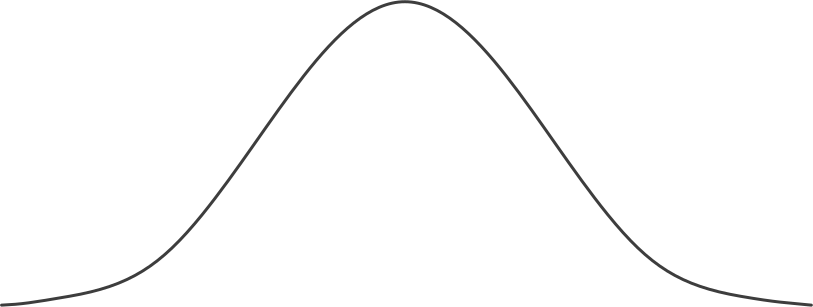
10%$36,050
25%$38,610
50%$46,520Median
75%$59,680
90%$75,660
Median Hourly Wage$22
Job growth4.5%
Total Employment23,870
| Metro area | Median Salary | Bottom 10% | Top 10% |
|---|---|---|---|
| New York-Newark-Jersey City, NY-NJ | $50,230 | $37,130 | $78,740 |
| Elmira, NY | $46,320 | $35,770 | $81,490 |
| Ithaca, NY | $45,980 | $37,530 | $62,290 |
| Kingston, NY | $45,080 | $37,710 | $61,680 |
| Glens Falls, NY | $44,460 | $34,510 | $75,080 |
| Albany-Schenectady-Troy, NY | $43,790 | $36,360 | $58,750 |
| Binghamton, NY | $43,080 | $33,970 | $73,040 |
| Kiryas Joel-Poughkeepsie-Newburgh, NY | $43,030 | $35,560 | $65,310 |
| Utica-Rome, NY | $39,950 | $34,940 | $66,880 |
| Rochester, NY | $38,890 | $34,370 | $64,890 |
Source: U.S. Bureau of Labor Statistics (BLS) 2025 median salary; projected job growth through 2035. Actual salaries vary depending on location, level of education, years of experience, work environment, and other factors. Salaries may differ even more for those who are self-employed or work part time.
Types of work environments for early childhood education teachers in New York
Different environments cater to the diverse needs of families and children across New York, providing varied opportunities for ECE professionals. Here’s a list of common work environments for ECE teachers in New York and the median annual salary for the state:
| Workplace | Median annual salary from the BLS |
|---|---|
| Preschools | $46,520 |
| Kindergartens | $77,630 |
| Specialty schools, such as Montessori or religious organizations | $44,530 |
| Elementary schools | $85,760 |
| Special education schools | $68,180 |
Salary ranges for preschool teachers in NY
The salary range for ECE teachers in New York typically spans from $36,050 to $75,660 per year. This accounts for entry-level positions to more senior roles and takes into consideration other factors such as experience and education, certifications and specializing and time in the position.
Pay by metro area for New York ECE teachers
Your earning level may depend upon where you live within a state and cities tend to pay better than rural or less populated areas. New York ranks among the top states for early education teachers for employment, with the New York City metro area taking the number one spot in the country for highest employment and pay. That said, here’s what the BLS reports as the top 10 highest paying metro areas for ECE teachers in the U.S.
Job growth and outlook for NY preschool teachers
The job outlook for preschool teachers in New York State over the next decade appears promising, driven by several key factors:
Projected demand:
- Statewide teacher shortage: New York State anticipates a significant need for new teachers across various educational levels. Estimates suggest that more than 180,000 new teachers will be required over the next decade to address retirements and post-pandemic departures. This demand encompasses early childhood educators, especially in high-need areas such as STEM, early childhood education, health, physical fitness, bilingual education, ESL and special education.
- Universal Pre-K expansion: Initiatives like New York City’s Universal Pre-K have increased the demand for qualified preschool teachers. The expansion of such programs statewide could further elevate the need for ECE professionals.
Employment growth:
- National projections: According to the BLS, employment of preschool teachers is projected to grow by 4.5% through 2035, aligning with the average growth rate for all occupations. This national trend suggests a steady demand for ECE teachers.
Factors influencing demand:
- Retirements and workforce exits: A significant number of current educators are expected to retire or leave the profession, creating openings for new teachers.
- Educational initiatives: Ongoing efforts to enhance early childhood education quality and accessibility contribute to the demand for qualified ECE teachers.
The BLS reported the top metro areas for the employment of ECE teachers in the U.S. as:
Factors affecting ECE teacher salaries in New York
Several factors influence how much ECE teachers can earn in New York State:
- Education level:
- Teachers with higher qualifications, such as a bachelor’s or master’s degree in Early Childhood Education, often earn higher salaries compared to those with an associate degree or a high school diploma.
- Experience:
- Years of teaching experience significantly impact earning potential. Many schools and organizations use a tiered salary system that increases pay with tenure.
- Certification:
- Holding state teaching certifications, such as New York State Initial or Professional Certification in Early Childhood Education, can lead to better-paying positions, especially in public schools or specialized programs.
- Employer:
- Public schools and government-funded programs such as Universal Pre-K or Head Start generally offer higher salaries than private daycare centers or community-based organizations. Larger institutions or national chains, such as Bright Horizons, may offer better compensation compared to smaller, independent preschools.
- Location:
- Salaries vary based on geographic location within New York State. Teachers in New York City earn higher wages to offset the cost of living, while rural or underserved areas may offer financial incentives to attract qualified educators.
- Union membership:
- Unionized positions, particularly in public schools, often come with standardized pay scales and negotiated salary increases.
- Specializing:
- Teachers with specialized skills, such as working with children with special needs, bilingual education or STEM integration, may command higher salaries.
- Program type:
- Teachers working in Universal Pre-K or 3-K for All programs often earn salaries comparable to K-12 teachers, which are higher than those in private preschool settings.
- Taking on additional responsibilities:
- ECE teachers who take on administrative roles, curriculum development or mentoring responsibilities can earn higher pay.
Teachers unions in New York and how they can help with pay disputes
In New York, the primary teachers’ unions include the New York State United Teachers (NYSUT) and, for those in New York City, the United Federation of Teachers (UFT). These unions represent educators, including Early Childhood Education (ECE) teachers, and advocate for fair compensation, benefits and working conditions.
Unions help with pay and pay disputes by negotiating collective bargaining agreements with employers, setting standardized pay scales and ensuring consistent salary increases tied to experience and education levels. If disputes arise, unions provide legal representation, mediation and support to ensure that members’ rights are upheld. They also advocate at the state and national levels for increased funding for education and higher wages for teachers, which benefits all members. Membership can offer significant protections and resources for ECE teachers navigating pay-related issues.
Education, certification and licensing
Each state has its own requirements for early childhood education teacher certification (also called teacher licensure), and schools teaching young children must be accredited by a governing body. Here are the steps to become an early childhood education teacher in New York State:
1. Earn a bachelor’s degree
- Earn a bachelor’s degree in Early Childhood Education (Birth–Grade 2) or a related field from a regionally accredited college or university.
- Ensure the program is approved by the New York State Education Department (NYSED) if pursuing state certification.
2. Complete a state-approved teacher preparation program
- Participate in a teacher preparation program that includes coursework in child development, pedagogy and teaching methods.
- Complete a required number of hours in student teaching or an internship to gain hands-on experience.
3. Pass the required certification exams
- Pass the NYSED exams Educating All Students (EAS), which tests foundational knowledge for working with diverse learners, and the Content Specialty Test (CST) in Early Childhood Education, which focuses on subject knowledge and teaching strategies.
4. Apply for initial certification
- Submit an application for Initial Certification through the NYSED Office of Teaching Initiatives.
- Include proof of completing an approved program and passing exam scores.
- Pay the application fee.
5. Complete the Dignity for All Students Act (DASA) training
- Attend a 6-hour workshop covering strategies for preventing bullying, harassment and discrimination in schools, as required by NYSED.
6. Gain teaching experience
- Work under your Initial Certification for up to five years while fulfilling requirements for professional certification.
- Gain experience in schools or programs aligned with your certification area.
7. Earn professional certification
- Complete a master’s degree in Early Childhood Education or a related field.
- Accumulate at least three years of full-time teaching experience, with at least one year mentored.
- Apply for professional certification, which is a permanent credential.
8. Maintain certification
- Stay updated on any changes to certification requirements through NYSED and complete 100 hours of professional development every five years (for professional certification).
Cost of living considerations in New York
The cost of living in New York, especially Manhattan and New York City, is notably high. The Cost of Living Index ranks New York as the fifth highest cost of living state, with an index of 125.1 (the national cost of living average is 100, so New York is 25.1% higher), but it varies significantly by region. Teachers need to consider housing, utilities, transportation, taxes and other daily expenses when choosing where to live and work.
Considerations:
Salary vs. Cost of Living: In high-cost areas like Manhattan and Brooklyn, ECE salaries may be higher to offset living expenses. Conversely, in lower-cost regions, salaries might be lower, but the cost of living is more manageable.
Job Availability: Urban areas typically offer more ECE job opportunities due to higher population density and demand for services. Rural areas may have fewer positions, but competition can be less intense
Quality of Life: High-cost areas offer more amenities and cultural experiences, while lower-cost areas may provide a quieter, more rural lifestyle.
Highest cost of living areas:
New York County (Manhattan)
Manhattan is renowned for its high living expenses, particularly in housing and daily necessities. Despite the high cost, Manhattan offers numerous ECE positions, especially in private schools, daycare centers, and early childhood programs.
Kings County (Brooklyn)
Brooklyn’s cost of living is substantial, with rising housing prices and general expenses. Brooklyn provides a variety of ECE job opportunities, including positions in public schools, charter schools and private institutions.
Queens County (Queens)
Queens has a high cost of living, influenced by its proximity to Manhattan and diverse population. Queens offers numerous ECE positions across various educational settings, catering to its multicultural community.
More affordable cost of living areas:
St. Lawrence County
St. Lawrence County has a lower cost of living, with affordable housing and general expenses. While there are fewer ECE positions compared to urban areas, opportunities exist in local schools and community programs.
Cattaraugus County
Cattaraugus County offers a lower cost of living, making it more affordable for residents. ECE job opportunities are limited but can be found in rural schools and childcare centers.
Herkimer County
Herkimer County provides a lower cost of living, with reasonable housing and daily expenses. ECE positions are available in local schools and community organizations, though they may be fewer in number.
Find comprehensive salary guides for early childhood education teachers in California and New York
Professional groups for NY early childhood education teachers
There are several professional organizations for early childhood education teachers in New York State, aside from unions. These organizations offer networking opportunities, professional development, resources and advocacy for ECE teachers:
- New York State Association for the Education of Young Children (NYAEYC):
- A state affiliate of the National Association for the Education of Young Children (NAEYC), NYSAEYC supports ECE professionals through advocacy, professional development and quality standards. They provide conferences, workshops, and resources to help teachers stay informed about best practices in early childhood education.
- New York State Child Care Coordinating Council (NYSCCCC):
- This organization advocates for high-quality child care and early education in New York State. It provides resources and training for ECE providers and engages in public policy discussions to improve early childhood programs.
- New York State Head Start Association (NYS HSA):
- This association provides professional development opportunities, advocacy and resources for teachers working within Head Start and Early Head Start programs. It works to improve early education for low-income children.
- The New York Early Childhood Professional Development Institute:
- Affiliated with the City University of New York (CUNY), this institute offers resources, professional development opportunities and certification programs for ECE professionals. They work to improve the quality of early childhood education across the state.
This ECE teacher salary guide for the state of New York strives to provide you with a comprehensive understanding of the salary landscape and key information regarding the teaching profession. Use this guide as a starting point to make informed decisions about your career path, negotiating salaries and for setting realistic expectations for your educational and professional future.