
By: All Education Schools Staff
Updated: February 6, 2026
What special education teacher salaries look like in Georgia

Georgia offers a unique set of opportunities and benefits for those looking to become a special education teacher. The state has a mix of factors that can make it an appealing choice for educators in this field. Here are some key reasons why Georgia stands out as a special place to work as a special education teacher:
- Diverse student population:
- Georgia is home to a diverse student population, with many different cultural, linguistic and socioeconomic backgrounds. This diversity provides special education teachers with the opportunity to work with a wide range of students and to develop expertise in addressing various disabilities and learning needs.
- High demand for special ed teachers:
- Like many states, Georgia has a high demand for special education teachers, especially in rural areas and larger urban districts such as Atlanta. Many districts offer incentives, like hiring bonuses or loan forgiveness programs, to attract teachers to fill special education positions. And as the state population grows and more students with disabilities are identified, the need for trained special education professionals continues to rise. This means more job opportunities in a variety of settings—from public schools to charter schools to specialized private institutions.
- Competitive pay:
- While teacher pay can vary by district and region, Georgia offers competitive salaries, especially when considering the state’s cost of living. Salaries are generally higher in metropolitan areas like Atlanta, but rural districts also offer attractive compensation packages to attract special education teachers.
- Innovative special ed programs:
- Georgia is at the forefront of inclusive education initiatives, meaning that special education teachers often work in integrated classrooms where students with disabilities are educated alongside their typically developing peers. This promotes collaboration with general education teachers and provides a dynamic and supportive teaching environment. The state also runs several programs aimed at improving special education services, such as the Georgia Network for Educational and Therapeutic Support (GNETS), which offers specialized programs for students with emotional and behavioral disabilities. These programs provide additional support and resources for both students and teachers.
- Quality of life:
- Compared to many other states, Georgia offers a relatively low cost of living, especially in smaller towns and suburban areas. Housing, groceries and transportation are affordable, which allows teachers to have a more comfortable lifestyle on their salaries.
Quick view of special education teachers in Georgia
Using special education teachers in the kindergarten and elementary school system as an example, there are 10,750 people employed as kindergarten and elementary school special education teachers in Georgia said the U.S. Bureau of Labor Statistics (BLS)—that’s over two people for every 1,000 who live in the state working in the profession. Around 2,740 teach at the secondary education level in Georgia. Though the forecasted job growth for the coming decade for special ed teachers at a national level is -1.8%, O*NET, a subsidiary of the BLS, said that Georgia should see a 10% job growth through 2030.
Here are five top employers of special education teachers in Georgia, across various levels of schooling, including elementary, middle, secondary and even special programs:
- Atlanta Public Schools (APS), Atlanta:
- Atlanta Public Schools is the largest school district in Georgia, serving a diverse student population. APS offers a wide range of special education services, from early childhood special education to services for students with autism, learning disabilities and emotional/behavioral disorders. As a large urban district, APS provides opportunities to work in diverse classrooms with a variety of students who have differing needs. Special education teachers in APS are involved in developing Individualized Education Plans (IEPs) and collaborating with general education teachers to support inclusion.
- DeKalb County School District, DeKalb County:
- DeKalb County is one of the largest school districts in Georgia, located just outside Atlanta. The district serves over 100,000 students and offers a comprehensive special education program, including services for students with developmental disabilities, speech and language disorders and behavioral challenges.
- Gwinnett County Public Schools (GCPS), Atlanta, Gwinnett County:
- Gwinnett County is one of the largest and fastest-growing school districts in Georgia, located northeast of Atlanta. The district serves over 180,000 students and provides comprehensive special education services, including early intervention programs, inclusion programs and specialized programs for students with autism, intellectual disabilities and other exceptionalities. GCPS is known for its commitment to educational excellence and its wide variety of special education programs. Teachers in this district often work in collaborative environments, helping to ensure that students with disabilities can succeed in both general and specialized education settings.
- Fulton County Schools, Fulton County:
- Fulton County Schools, located in the northern suburbs of Atlanta, is another large district that serves a diverse student population. It offers a wide range of special education services, including individualized services for students with autism, emotional and behavioral disorders, learning disabilities and physical disabilities. Fulton County Schools are known for their focus on inclusive education, offering services that support students in both special education and mainstream classrooms. The district also provides professional development opportunities and resources to ensure that special education teachers are well-prepared to meet the needs of their students.
- Georgia Network for Educational and Therapeutic Support (GNETS), Rome:
- GNETS provides specialized educational services to students with emotional and behavioral disorders in Georgia. It is a state-run program, not tied to a specific district, but serves students in a variety of regions across the state. GNETS provides therapeutic support alongside educational services to ensure students with behavioral challenges receive the care and teaching they need. Special education teachers working for GNETS often focus on students with emotional and behavioral disabilities, making it an excellent opportunity for those interested in working with this specific population.
Special ed teacher salary stats for Georgia
In general, Georgia offers competitive salaries, particularly in larger districts like Atlanta Public Schools, Fulton County and Gwinnett County, but the salary structure is influenced by a variety of factors that vary by location, experience and specialization within special education.
Median special education teacher salary in Georgia
In Georgia, kindergarten and elementary special ed teachers earned a median annual salary of $67,710, while secondary level special ed teachers earned $71,050. These salaries far exceed the national median of $63,000 and $69,590 respectively, and combined with Georgia having a relatively low cost of living, make teaching special education a potentially comfortable financial choice.
Median salaries for kindergarten and elementary level special ed teachers in Georgia and its main metro areas are below:
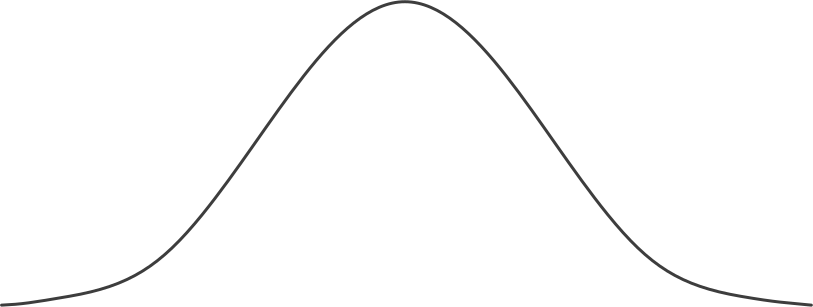
10%$46,760
25%$59,280
50%$67,710Median
75%$80,100
90%$98,260
Median Hourly WageN/A
Job growth-1.8%
Total Employment9,700
| Metro area | Median Salary | Bottom 10% | Top 10% |
|---|---|---|---|
| Atlanta-Sandy Springs-Roswell, GA | $76,130 | $58,220 | $99,050 |
| Warner Robins, GA | $64,190 | $47,080 | $94,920 |
| Savannah, GA | $62,600 | $29,390 | $78,140 |
| Hinesville, GA | $61,360 | $47,210 | $89,110 |
| Gainesville, GA | $61,090 | $38,450 | $94,540 |
| Valdosta, GA | $60,980 | $40,340 | $98,320 |
| Augusta-Richmond County, GA-SC | $60,650 | $44,430 | $80,320 |
| Columbus, GA-AL | $60,180 | $43,050 | $75,470 |
| Dalton, GA | $59,370 | $46,130 | $80,200 |
| Macon-Bibb County, GA | $59,080 | $36,930 | $83,050 |
Source: U.S. Bureau of Labor Statistics (BLS) 2024 median salary; projected job growth through 2034. Actual salaries vary depending on location, level of education, years of experience, work environment, and other factors. Salaries may differ even more for those who are self-employed or work part time.
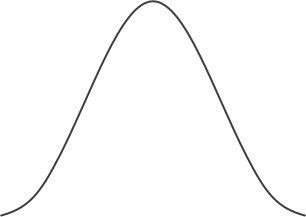
Median salaries for Georgia special ed teachers at the secondary school level according to the BLS:
10%$50,320
25%$58,780
50%$71,050Median
75%$78,320
90%$95,250
Median Hourly WageN/A
Job growth-1.6%
Total Employment4,180
| Metro area | Median Salary | Bottom 10% | Top 10% |
|---|---|---|---|
| Atlanta-Sandy Springs-Roswell, GA | $75,580 | $57,450 | $95,830 |
| Warner Robins, GA | $70,110 | $49,800 | $127,160 |
| Rome, GA | $62,000 | $42,340 | $82,000 |
| Augusta-Richmond County, GA-SC | $61,670 | $47,140 | $83,040 |
| Athens-Clarke County, GA | $61,570 | $46,900 | $88,150 |
| Columbus, GA-AL | $60,280 | $47,900 | $79,090 |
| Gainesville, GA | $60,200 | $49,290 | $74,970 |
Source: U.S. Bureau of Labor Statistics (BLS) 2024 median salary; projected job growth through 2034. Actual salaries vary depending on location, level of education, years of experience, work environment, and other factors. Salaries may differ even more for those who are self-employed or work part time.
Comparing salaries for different special ed teacher education levels
What level of students you teach may make a difference in your salary. The BLS reported salaries for Georgia’s special education teachers at the following grade levels:
| Education level taught | Median annual salary from the BLS |
|---|---|
| Preschool | $78,300 |
| Kindergarten and elementary school | $67,710 |
| Middle school | $67,710 |
| Secondary school | $71,050 |
| All other special ed teachers | $61,240 |
Salary ranges for special education teachers in Georgia
The salary range for kindergarten and elementary level special education teachers in Georgia typically spans from $46,760 to $98,260 per year. Once again, this accounts for entry-level positions to more experienced teacher or administrative roles and takes into consideration other factors such as education and geographic location of employment.
Pay by metro area for Georgia special ed teachers
Your earning level likely depends upon the district in which you work. In Georgia, more affluent and urban districts tend to offer higher salaries compared to rural districts. Georgia has a relatively low cost of living, but there are variations depending on where you live. Teachers in metro Atlanta or nearby urban areas typically face a higher cost of living, which is often reflected in their higher salaries.
In contrast, teachers in rural areas or smaller towns may have lower salaries but enjoy a lower cost of living and lower housing costs. Though no Georgia metro area ranked in the BLS’ top 10 (it’s dominated by California metro areas), they do report that the Atlanta-Sandy Springs-Roswell metro area held the number three spot for highest employment of special education teachers at the kindergarten and elementary school level. Here’s what the BLS reported as the top 10 highest paying metro areas for kindergarten and elementary school special ed teachers in the U.S.:
Job growth and outlook for Georgia special ed teachers
The job growth outlook in Georgia over the next several years is projected to be positive, with the state expected to outpace national averages despite a general slowdown in economic expansion.
Overall economic growth in Georgia:
- 2025 projections: The University of Georgia’s Terry College of Business forecasts that the number of jobs in Georgia will increase by 1% in 2025, which is slower than the 1.5% gain estimated for 2024 but still higher than the national job growth rate of 0.6%.
- Unemployment rates: The state’s unemployment rate is anticipated to rise slightly from 3.7% to 4%, remaining below the national expectation of 4.3%. This increase is attributed to slowed hiring rather than layoffs.
Special education teacher outlook in Georgia:
- State-specific projections: In Georgia, employment for special education teachers is projected to grow by 10% through 2030, increasing from 24,820 to 27,460 positions. This growth rate is notably higher than the national projection, indicating a robust demand for special education professionals within the state.
- National comparison: Nationally, the employment of special education teachers is expected to show little or no change through 2034. Despite this stagnant growth, approximately 35,900 openings for special education teachers are projected each year, primarily due to the need to replace workers who transfer to different occupations or exit the labor force, said the BLS.
So, while national data indicates a decline or stagnation in job growth, Georgia’s outlook remains comparatively strong. The state’s economy is expected to continue expanding, albeit at a slower pace, and the demand for special education teachers is projected to grow significantly. This suggests that Georgia will continue to offer favorable employment opportunities for educators in the coming years.
The BLS reported the top metro areas for the employment of special ed teachers at the kindergarten and elementary school level in the U.S. as:
Factors affecting GA special education teacher pay
In Georgia, as with many states, a special education teacher’s salary is determined by several factors that are common to the state’s public education system. However, there are also unique elements specific to Georgia that can influence the salary you earn. Here’s a breakdown of the main factors:
- Education level and certification:
- The level of education you’ve completed plays a significant role in determining your salary. Teachers with a bachelor’s degree earn less than those with a master’s degree or higher. Georgia’s pay scales often include higher pay for advanced degrees, especially in fields related to special education or education in general. The type of teaching certification you hold also affects your salary. In Georgia, there are several certifications, and the specific certification you hold may impact your pay.
- Years of experience:
- Like many states, Georgia uses a salary schedule that ties pay to experience. Teachers with more years of teaching experience will generally earn more, regardless of whether they are in special education or general education.Teachers typically start at a base salary and receive annual step increases based on their years of service.
- Your school district:
- Teacher salaries can vary widely depending on the district in which you work. In Georgia, more affluent and urban districts tend to offer higher salaries compared to rural districts. These larger districts with higher enrollments tend to have more robust compensation packages, including additional benefits and opportunities for professional development.
- Type of school or program:
- The type of school can also affect salary. Public school teachers typically earn a base salary set by the district and the state, whereas special education teachers in charter schools or private schools may have different pay structures.
- Special education incentives and stipends:
- Some Georgia school districts offer incentive pay or stipends to special education teachers, especially those working in high-need areas or teaching specific disabilities such as autism or severe intellectual disabilities. Certain regions or specialties may be designated as critical shortage areas, which may come with added benefits, including higher salaries or loan forgiveness programs for teachers willing to work in these areas.
Teachers unions and how they work in Georgia
Georgia is a right-to-work state, meaning that teachers (including special education teachers) are not required to join a union to be employed. However, professional associations and advocacy groups do exist to support teachers in areas such as contract negotiations, legal protections and professional development.
No collective bargaining rights
Unlike some states where teacher unions negotiate contracts and salaries, Georgia does not allow collective bargaining for public school employees, including special education teachers. This means:
- Teachers cannot strike or collectively negotiate wages, benefits or working conditions as a group.
- School districts set salaries and policies independently, typically following state guidelines.
- Union membership is voluntary, and unions primarily serve as advocacy groups rather than collective bargaining entities.
Major teacher organizations in Georgia
Although traditional unions have limited power in Georgia, special education teachers can join professional organizations that offer legal support, professional development and lobbying efforts.
Support for special education teachers
- Since special education teachers face unique challenges, including high caseloads, legal compliance and individualized education plans, these organizations offer legal representation in case of disputes, such as:
- IEP-related conflicts with parents or administrators.
- Allegations of non-compliance with federal or state special education laws.
- Job termination or contract issues.
- Some local districts have smaller associations that advocate specifically for special education concerns, even though they lack union-like bargaining power.
Advocacy and political influence
They may also endorse political candidates who support pro-education policies. While Georgia unions cannot engage in collective bargaining, they can still lobby state lawmakers for:
- Higher salaries and improved benefits for teachers.
- Lower student-to-teacher ratios in special education.
- Increased funding for special education programs.
Education, certification and licensing
Becoming a special education teacher in Georgia involves several key steps, including education, certification, and ongoing professional development. Below is a detailed look at the education path specific to Georgia for aspiring special education teachers.
The first step is to earn a bachelor’s degree in special education or a related field. Many universities in Georgia offer degree programs designed specifically for those interested in teaching students with disabilities.
Some universities in Georgia offering this program include:
- University of Georgia (UGA)
- Georgia State University
- Georgia Southwestern State University
- Valdosta State University
Complete student teaching
Most bachelor’s degree programs require student teaching or fieldwork as part of the curriculum. This is an essential step for gaining practical experience in a classroom setting under the supervision of an experienced teacher. Aspiring special education teachers typically work in classrooms that serve students with various disabilities, giving them hands-on experience in:
- Developing IEPs
- Working with diverse groups of students
- Implementing specialized instructional strategies
- Collaborating with general education teachers and parents
Obtain Georgia certification
To teach in Georgia’s public schools, you need to obtain certification from the Georgia Professional Standards Commission (GaPSC). The certification process for special education teachers typically involves the following steps:
To apply for certification, you’ll need to:
- Pass the Georgia Assessments for the Certification of Educators (GACE): Aspiring special education teachers must pass the GACE Special Education exam, which tests knowledge and skills related to teaching students with disabilities. This is a required exam for general special education teachers.Additional exams may be required for those specializing in areas such as autism or behavior disorders.
- Complete a teacher preparation program: If you graduate from an accredited teacher preparation program (like those offered by Georgia universities), your program will generally qualify you to apply for your initial certification. If your degree is in a related field but not specifically in special education, you might need to complete additional coursework or an alternative certification program.
Apply for the Induction Certificate
Once you have completed your degree and passed the required exams, you’ll be granted an Induction Certificate, which is valid for three years. During this period, you’ll need to complete professional development and work under the mentorship of a more experienced teacher.
Complete professional learning and induction
Within the first three years of teaching, you must complete a professional induction program. This involves:
- Ongoing professional development in the form of workshops or conferences
- Mentorship from experienced educators
- Classroom observations and feedback
- Meeting certification renewal requirements
At the end of this period, if your performance is satisfactory, you will be eligible to move from an Induction Certificate to a Clear Renewable Certificate.
Pursue an advanced degrees or certification
While a bachelor’s degree and initial certification are required to teach in Georgia, you may choose to pursue further education or specialization to advance your career or increase your earning potential:
- Master’s degree: Many special education teachers pursue a Master of Special Education (MEd) or Master of Arts in Special Education to gain advanced knowledge in the field and improve their qualifications.
- Specialized certification: You can pursue additional certifications in areas such as:
- Autism Spectrum Disorders (ASD)
- Behavioral Disabilities
- Early Childhood Special Education
- Gifted Education
Keep current with continuing education
Georgia requires teachers to maintain their certification through continuing professional development. This includes:
- Completing professional development hours.
- Staying up to date on special education laws, new teaching strategies and best practices in the field.
Alternative certification path (for non-education degree holders)
If you hold a bachelor’s degree in a field other than education and want to transition to teaching special education, you can pursue alternative certification through the Georgia TAPP (Teacher Academy of Preparation and Pedagogy) or another alternative certification program. These programs are designed to help individuals become certified educators in a shorter time frame, and they include:
- You’ll take courses focused on pedagogy, special education, and classroom management.
- You’ll work under the mentorship of an experienced teacher while teaching in a classroom.
- You will still need to pass the GACE exams to obtain certification.
Cost of living in Georgia
The cost of living in Georgia is generally lower than the national average, making it an attractive place for many professionals, including special education teachers. Housing costs, in particular, are more affordable than in major metro areas like New York or California, but they are higher in urban centers like Atlanta. While utility costs and groceries are also relatively reasonable, transportation (especially in larger cities with less public transit) can add to living expenses. Overall, Georgia offers a more affordable lifestyle, though certain areas, particularly near Atlanta, can be pricier.
High-cost areas that employ special ed teachers
Atlanta:
As Georgia’s largest city, Atlanta has a high cost of living, especially in housing and transportation.
Alpharetta:
Located north of Atlanta, this suburb offers a higher standard of living with pricey real estate and upscale amenities.
More affordable areas for special ed teachers in Georgia
Augusta:
Known for its lower housing costs and relatively low property taxes, Augusta offers a more budget-friendly option.
Columbus:
This city offers affordable housing and a lower overall cost of living compared to other metro areas.
Professional groups for Georgia special ed teachers
Joining a professional association in Georgia offers special ed teachers legal protection, liability insurance, and access to continuing education opportunities. It also provides a platform for advocacy on educational policies and ensures teachers stay connected to a network of peers and resources.
- Georgia Association of Educators (GAE):
- GAE is affiliated with the National Education Association (NEA). They provide legal assistance, liability insurance and professional development and advocates for education policies at the state level but does not negotiate contracts.
- Professional Association of Georgia Educators (PAGE):
- PAGE is the largest teacher organization in Georgia and focuses on teacher advocacy, legal protection and scholarships. They offer mentoring programs for new teachers, including special education professionals.
- American Federation of Teachers–Georgia (AFT Georgia):
- AFT Georgia is affiliated with the American Federation of Teachers (AFT), which advocates for better working conditions and increased funding for public education. AFT Georgia also engages in political lobbying at the state level.
Find comprehensive salary guides for special education teachers in these states: California | Georgia | Hawaii | Illinois | Texas
This special education teacher salary guide for Texas strives to provide a comprehensive understanding of the salary landscape and key information regarding the teaching profession in the state. Use this guide as a starting point to make informed decisions about your career path, negotiating salaries and for setting realistic expectations for your educational and professional future.