

By: All Education Schools Staff
Updated: February 6, 2026
Special education teacher salaries in Hawaii

Hawaii has a unique cultural and educational environment that makes it an appealing place for special education teachers. Here are a few reasons to consider the state:
- Strong emphasis on inclusion and special education:
- Hawaii has a single, statewide public school system (Hawaii Department of Education, or HIDOE), which allows for more centralized policies and resources for special education students. The state has made efforts to improve special education services, and demand for qualified teachers is high.
- Cultural diversity and ‘ohana-based education:
- Hawaii’s multicultural population includes Native Hawaiian, Pacific Islander, Asian and other ethnic groups. The concept of ohana (family) extends into the classroom, promoting a supportive, community-centered approach to education. Special education teachers who value inclusive and culturally responsive teaching often find this setting rewarding.
- Unique language and learning needs:
- Many students in Hawaii are bilingual or multilingual, with Hawaiian Creole English spoken widely. Some students, particularly those from immigrant or Native Hawaiian backgrounds, may have unique language and learning needs, making special education a crucial field. Teachers with training in both special education and language development are in high demand.
- Natural beauty and work-life balance:
- While the cost of living is high, many teachers are drawn to Hawaii for its beautiful environment, outdoor lifestyle and warm climate. Those who love nature, surfing, hiking and a laid-back island atmosphere find the work-life balance appealing.
Quick view of special education teachers in California
There are 190 people employed as kindergarten and elementary school special education teachers in Hawaii said the U.S. Bureau of Labor Statistics (BLS)—and another 900 teach special ed at the secondary school level. The forecasted job growth for the coming decade at a national level is -1.8% though O*NET, a subsidiary of the BLS, said that Hawaii would see 10% job growth through 2030 for special ed teachers at the elementary school level.
Here are five diverse and notable employers for special education teachers across various grade levels in Hawaii:
- Hawaii State Department of Education (HIDOE), Honolulu:
- As the sole public education system in the state, HIDOE operates numerous schools across all islands, offering positions in elementary, middle and high school special education. They frequently have openings for special education teachers.
- Easterseals Hawaii, Honolulu:
- A non-profit organization dedicated to providing exceptional services to individuals with disabilities and special needs. They offer early intervention and educational programs, creating opportunities for special education professionals to work in diverse settings.
- Voyager Public Charter School, Honolulu:
- Located in Honolulu, this charter school emphasizes project-based learning and often seeks special education teachers for middle school grades. They focus on inclusive education within a collaborative environment.
- The Stepping Stones Group, Honolulu, Maui, Oahu and several locations:
- A nationwide provider of therapeutic and behavioral health services, they have a presence in Hawaii and offer opportunities for special education teachers, particularly in specialized (such as speech-language and autism) and clinical settings.
- Hawaii Technology Academy (HTA), Waipahu:
- As a public charter school with multiple campuses, HTA offers blended learning environments and frequently hires special education teachers for various grade levels, supporting students in both online and in-person settings.
Special education teacher salary stats for Hawaii
Your salary as a special education teacher in Hawaii depends on several factors, including experience, education level, certifications earned and location within the state. The Hawaii State Department of Education (HIDOE) uses a structured salary schedule, meaning teachers with advanced degrees, such as a master’s or doctorate, and more years of experience earn higher salaries. Pay also varies depending on whether you work in a public school, charter school, private school or special education program run by nonprofits or agencies. While grade level does not typically affect base pay, roles in adult education, early intervention or specialized behavioral programs may offer different compensation structures. Additionally, teachers working in rural or remote areas—such as on neighbor islands—may receive additional incentives or cost-of-living adjustments.
Median special education teacher salary in Hawaii
In Hawaii, kindergarten and elementary special ed teachers earned a median annual salary of $55,760, while secondary level special ed teachers earned $58,660. These are significant decreases from the national median of $63,000 and $69,590 respectively, and considering Hawaii’s cost of living, could make working in Hawaii and affording its higher costs difficult for teachers in some locations.
Median salaries for kindergarten and elementary level special ed teachers in Hawaii and any main metro areas the BLS recorded are below:
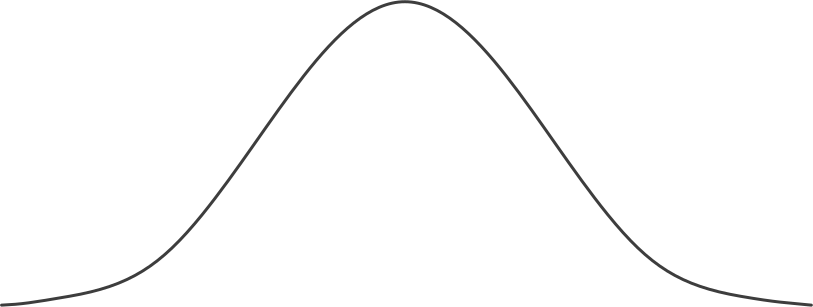

10%$46,500
25%$54,480
50%$55,760Median
75%$56,650
90%$57,090
Median Hourly WageN/A
Job growth-1.8%
Total Employment500
| Metro area | Median Salary | Bottom 10% | Top 10% |
|---|
Source: U.S. Bureau of Labor Statistics (BLS) 2024 median salary; projected job growth through 2034. Actual salaries vary depending on location, level of education, years of experience, work environment, and other factors. Salaries may differ even more for those who are self-employed or work part time.
Median salaries for Hawaii special ed teachers at the secondary school level look like this:
10%$58,240
25%$58,350
50%$58,660Median
75%$77,850
90%$78,640
Median Hourly WageN/A
Job growth-1.6%
Total Employment880
| Metro area | Median Salary | Bottom 10% | Top 10% |
|---|---|---|---|
| Urban Honolulu, HI | $58,660 | $58,240 | $78,010 |
Source: U.S. Bureau of Labor Statistics (BLS) 2024 median salary; projected job growth through 2034. Actual salaries vary depending on location, level of education, years of experience, work environment, and other factors. Salaries may differ even more for those who are self-employed or work part time.
A note about what makes Hawaii a special place to teach special ed
Hawaii embraces Aloha ‘Āina (love of the land) and traditional healing and educational approaches, such as Hoʻoponopono (conflict resolution and emotional healing). Many special education programs incorporate these cultural values into their teaching, offering a holistic approach that attracts teachers interested in alternative or culturally infused special education methods.
Salary ranges for special education teachers in Hawaii
The salary range for kindergarten and elementary level special education teachers in Hawaii typically spans from $46,500 to $57,090 per year. This accounts for entry-level positions to more experienced teacher roles and takes into consideration other factors such as education earned, type of school and geographic location of employment.
Pay by metro area for Hawaii special ed teachers
Your earning level may depend upon where you live within Hawaii and cities tend to pay better than rural or less populated areas. There are no metro areas in Hawaii that rank on the BLS’ top paying metro areas, or for highest employment of special ed teachers. Hawaii is often too small in population and workforce size to rank prominently on the BLS’ national lists for top-paying or highest-employing states for special education teachers. The BLS rankings typically highlight states with large school systems, such as California, Texas or New York, which employ tens of thousands of teachers.
However, while Hawaii may not rank in sheer employment numbers, it can still offer competitive pay relative to other states, especially when adjusted for its unique cost-of-living factors and teacher shortage incentives.
Job growth and outlook for Hawaii’s special ed teachers
The job growth outlook for special education teachers in Hawaii is notably positive. According to O*NET OnLine, which is a subsidiary of the BLS, employment in this field is projected to grow by 10% through 2030, increasing to 270 positions. This growth rate is significantly higher than the national projection, where overall employment of special education teachers is expected to show little or no change during a similar period.
Hawaii stands out due to its concentrated efforts to attract and retain special education teachers. Notably, the state offers a $10,000 annual pay differential for licensed special education teachers, which has been instrumental in reducing vacancy rates in these positions.
Additionally, special education is the highest area of need in Hawaii, with approximately 30% of new teachers hired each year being in special education positions. These targeted initiatives and the state’s recognition of the importance of special education contribute to a more favorable job outlook in Hawaii compared to other states.
The BLS reported the top metro areas for the employment of special ed teachers at the kindergarten and elementary school level in the U.S. as:
Factors affecting special education teacher salaries in Hawaii
The salary level for special education teachers in Hawaii is impacted by several key factors, including the following:
- Experience and years of service:
- Hawaii’s Department of Education (HIDOE) follows a salary schedule where teachers earn higher salaries with more years of teaching experience. Salary increases are structured in step increments based on service years.
- Education attained and credentials:
- Teachers with advanced degrees may earn higher salaries than those with only a bachelor’s degree. Additional certifications in areas like autism, behavioral disorders or assistive technology may also lead to higher pay or specialized roles.
- Type of employer and school setting:
- Most teachers work under the statewide public school system, which has a set salary scale while charter and private schools may have different pay structures, sometimes higher or lower than public schools. Working in organizations like Easterseals Hawaii or early intervention programs can lead to different salary offers based on funding sources.
- Geographic location:
- Teachers working in rural or remote areas such as Moloka‘i, Lana‘i or parts of the Big Island, may qualify for hard-to-staff bonuses or additional benefits due to the high need for educators in these regions.
- Shortage and incentive pay:
- Hawaii has historically struggled with teacher shortages, particularly in special education. As a response, HIDOE offers a $10,000 annual pay differential for licensed special education teachers, making the field more financially competitive.
Teachers unions and how they work for Hawaii’s special ed teachers
Hawaii has a statewide teachers’ union, the Hawaii State Teachers Association (HSTA), which represents all public school teachers, including special education teachers. Since Hawaii has a single, unified public school system (HIDOE) rather than district-based systems like in other states, the HSTA negotiates contracts, salaries and benefits for all teachers statewide. This means special education teachers receive the same base pay structure as general education teachers but benefit from union-negotiated incentives, such as the $10,000 annual pay differential for licensed special ed teachers. The union also advocates for better working conditions, reduced caseloads and professional development opportunities tailored to the unique challenges of special education.
Education, certification and licensing
The education pathway for becoming a special education teacher in Hawaii requires that you follow these key steps:
Earn a bachelor’s degree
- Candidates must complete a bachelor’s degree in education or a related field. Those without a special education focus can complete additional coursework or training later.
Complete a state-approved teacher preparation program
- Programs can be part of a degree program or a post-baccalaureate certification.
- Universities such as the University of Hawaii at Mānoa and Chaminade University offer special education licensure programs.
Pass required certification exams
- Hawaii requires the Praxis Core Academic Skills for Educators exam. Candidates must also pass the Praxis Special Education exam relevant to the grade levels they plan to teach.
Apply for a Hawaii teaching license
- Teachers must apply for a teaching license through the Hawaii Teacher Standards Board (HTSB).
- Special education teachers can obtain an initial, standard or advanced license based on experience and education.
Consider advanced credentials
- Many teachers pursue a Master’s in Special Education to increase job opportunities and salary.
- Additional certifications in autism, behavioral disorders or early childhood special education can expand career options.
- Hawaii also offers alternative certification routes for those with a bachelor’s degree in another field, making it possible for career changers to enter special education teaching.
Cost of living in Hawaii
Hawaii has one of the highest costs of living in the U.S., largely due to expensive housing, high utility costs and the need to import most goods. Honolulu, the state’s largest city, is one of the most expensive places to live, with median home prices exceeding $800,000 and high rental costs. Kailua (on Oahu) is another pricey area, known for its scenic beauty but with limited affordable housing options.
On the other hand, cities like Hilo (Big Island) and Kahului (Maui) tend to be more affordable, offering lower housing costs and a slower pace of life, though wages may also be slightly lower. Special education teachers considering a move to Hawaii may need to weigh higher salaries and incentives against the overall cost of living when choosing where to work.
Professional groups for Hawaii special education teachers
Special education teachers in Hawaii can join several professional groups to network, access resources and advocate for their field. Some key organizations include:
- Hawaii State Teachers Association (HSTA):
- HSTA is the main union representing all public school teachers in Hawaii, including special education teachers. It provides collective bargaining, legal support and professional development opportunities.
- Council for Exceptional Children–Hawaii Unit (CEC Hawaii):
- CEC Hawaii is a state chapter of the national Council for Exceptional Children (CEC). It focuses on professional development, networking and policy advocacy for educators working with students with disabilities.
- Hawaii Association of Behavior Analysis (HABA):
- HABA is a great group for special educators working with students with autism and behavioral challenges. It offers training, conferences and resources on Applied Behavior Analysis (ABA).
- Special Education Advisory Council (SEAC) of Hawaii
- SEAC is an advisory group that collaborates with the Hawaii Department of Education to improve special education policies and services. Special education teachers can engage in advocacy and help shape policies.
Find comprehensive salary guides for special education teachers in these states: California | Georgia | Hawaii | Illinois | Texas
This special education teacher salary guide for Hawaii aims to provide you with a comprehensive understanding of the salary landscape and key information regarding the teaching profession in the state. Use this guide as a starting point to make informed decisions about your career path, negotiating salaries and for setting realistic expectations for your educational and professional future.